

Short answer
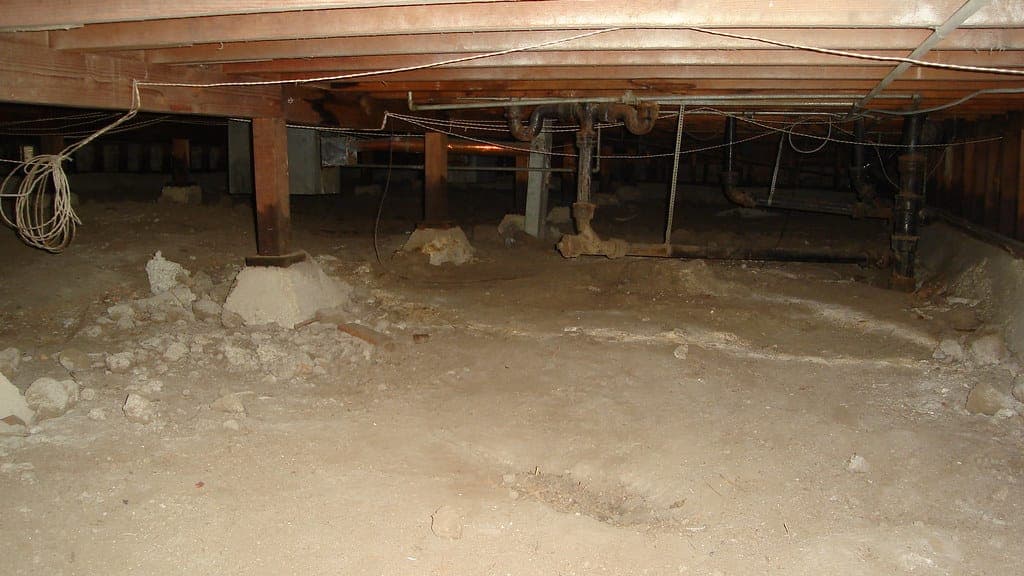
A pier and beam house stands on piers and beams over a crawl space instead of sitting on a slab. Repairs typically involve adjusting or shimming the beams, replacing failed piers, or replacing damaged wood in the floor system. In McKinney, even shimming counts as foundation repair and needs a permit backed by a Texas-licensed engineer's letter. Get an independent engineer to evaluate the house first, then compare bids against that design.
How pier and beam differs from a slab
In a pier and beam house, the floor is a wood frame of joists and beams resting on piers, with a crawl space between the floor and the ground. A slab house sits directly on a concrete slab poured on the soil. The Foundation Performance Association, a Houston group of engineers and industry members, points out in its homebuyers' guide that what people call "pier and beam" is often more precisely a crawl space foundation, and that there are several variations.
In Collin County you are most likely to find pier and beam in older neighborhoods. The Census Bureau's American Community Survey puts the median year built for Plano homes at 1993, with about 40% built before 1990, while Prosper's median is 2014 (ACS table B25035). The Census doesn't track foundation type by city, so no one can tell you from public data how many pier and beam homes each city has. The pier and beam vs slab guide covers the trade-offs.
The same clay that moves slabs moves pier and beam homes. By our analysis of NRCS soil survey data, Houston Black clay, which the survey rates as having very high shrink-swell potential, covers roughly 40% of McKinney and more than half of Plano. Piers that sit in the upper, active layer of that clay can rise and fall with it.
Signs that are worth an engineer's look
These are common reasons pier and beam owners call for an evaluation. Each can have more than one cause:
- Floors that feel bouncy, soft or noticeably sloped
- Doors that stick, swing on their own or won't latch
- Gaps between the floor and baseboards, or cracks in interior walls
- Musty smells, standing water or damp soil in the crawl space
- Visible rot, insect damage or sagging in beams and joists
- Piers that are leaning, cracked or no longer touching the beam
The Texas engineering board's advisory opinion 43 says analyzing the cause of a foundation condition and recommending repairs is the practice of engineering. So the right person to tell you what is going on under your floor is an independent Texas-licensed professional engineer, not a salesperson and not this website.
Common pier and beam repairs
McKinney's foundation repair guidelines are a useful list of what counts. The city defines foundation repair as "any leveling, replacement of piers, footings, shimming, or replacement of any part of the floor system," and says the rules apply to slab and pier and beam foundations alike. In general terms, those repairs look like this:
- Shimming and leveling. Adding or adjusting shims between the piers and the beams to bring the floor back toward level. It is often the least invasive repair, and shims can loosen or compress again as the soil moves.
- Pier replacement or added piers. Replacing failed or shallow piers, or adding piers where beams span too far. The options range from pressed concrete piles to drilled concrete piers; see pier types.
- Beam, sill and joist replacement. Replacing wood members damaged by rot or insects, or adding beams to shorten spans.
- Perimeter beam work. Many pier and beam homes have a concrete perimeter beam carrying the exterior walls, which can need its own support.
Which of these a house needs, and in what combination, is the engineer's call.
The crawl space matters as much as the piers
Moisture in the crawl space rots wood and can soften the soil under piers. The residential building code that Texas cities build their local codes on sets minimum crawl space ventilation at 1 square foot of net opening for every 150 square feet of under-floor area, with a vent within 3 feet of each outside corner, and requires an access opening (IRC sections R408.2 and R408.4). Cities adopt the code with their own amendments, so the exact rules for your house can differ.
Things owners commonly keep an eye on:
- Vents that are open and not buried by mulch or soil
- Gutters and downspouts carrying roof water away from the house (see drainage correction)
- Leaks from plumbing, air conditioning condensate lines or faucets near the crawl space
The Foundation Performance Association's maintenance guide lists leaking plumbing, dripping condensate lines and misdirected downspouts among the things that "can cause local high moisture contents" and uneven movement on expansive soil.
Permits and the engineer
Texas does not license foundation repair companies; licensing bills failed in 2011 and 2013. Cities fill the gap with permits:
- McKinney requires an engineer's letter and drawings to get the permit, notes whether plumbing needs testing, and closes the permit only after a Final Engineer's Report is uploaded (guidelines).
- Plano requires sealed plans and an engineer's letter from a "State of Texas Registered Engineer" (Plano handout).
- Frisco and Prosper also require sealed engineering and an engineer's letter at completion (Frisco, Prosper).
If a company tells you shimming "doesn't need a permit," check with your city first. In McKinney, the city's own definition says it does.
What to ask a foundation repair company
- Is your bid based on an engineer's design, and whose engineer is it?
- How many piers are being added or replaced, of what type, and how deep?
- Which beams, sills or joists are being replaced, and with what material?
- Who pulls the permit, and is the engineer's final letter included in the price?
- What does the warranty cover: the piers only, or shims and wood too? Does it transfer if you sell?
If you'd like bids, this guide can pass your request to a local foundation repair company that works on pier and beam homes. See how it works for how referrals are paid for.
Frequently asked questions
Is pier and beam easier to repair than a slab?
Often the structure is easier to reach, because a crew can work from the crawl space rather than tunneling or breaking concrete. That doesn't make every repair small: rotted framing or failed piers can add up. The engineer's evaluation tells you what your house needs.
Does shimming need a permit?
In McKinney, yes: the city's foundation repair guidelines list shimming as foundation repair that requires a permit and an engineer's letter. Check with your own city before work starts.
Why do my floors feel different in summer and winter?
Seasonal swelling and shrinking of the clay under the piers, and changes in crawl space moisture, can both move a floor. Whether what you're seeing is normal seasonal movement or something that needs repair is a question for an independent Texas-licensed professional engineer.
How much ventilation should a crawl space have?
The model residential code sets a minimum of 1 square foot of net vent opening per 150 square feet of crawl space, with a vent within 3 feet of each corner (IRC R408.2). Your city's adopted code may differ, and some crawl spaces are designed to be closed and conditioned instead.