

Short answer
Collin County's clay shrinks as it dries, and July and August are the county's driest, hottest months, so the soil under and beside a slab loses volume and the house moves with it. In 2026 the change was fast: the US Drought Monitor showed no drought in most of the county on August 11 and extreme or exceptional drought over 79% of it by September 22. Gaps at the slab edge and sticking doors are common in that kind of stretch. Keep soil moisture even, don't pour water into the gap, and have an independent Texas-licensed engineer look if signs keep growing.
Why late summer is when houses move
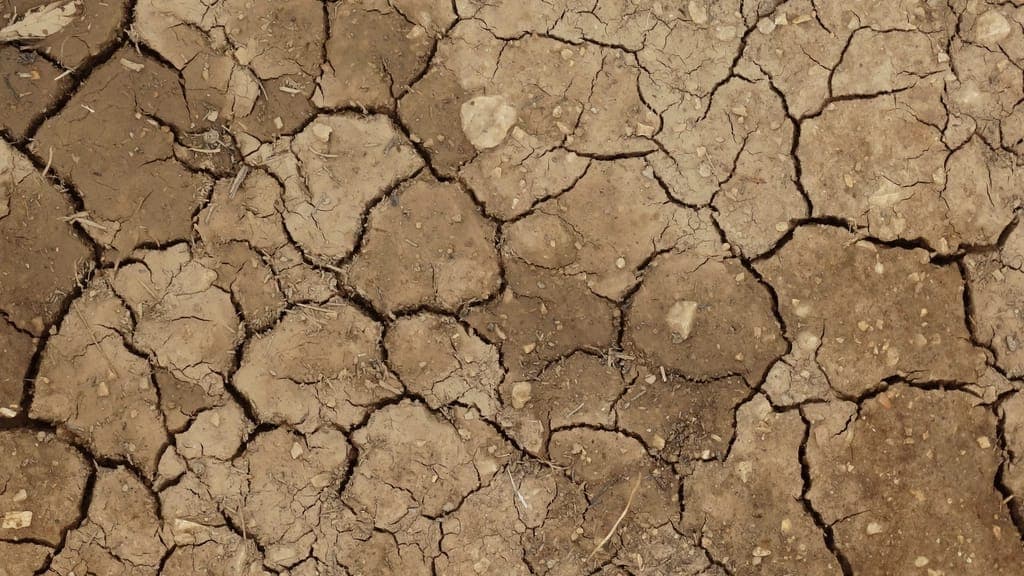
Most of Collin County sits on Blackland Prairie clay. The county's most common soil, Houston Black, has a "very high" shrink-swell rating in the USDA's NRCS soil survey data, and it covers about 37% of the county and more than half of Plano and Allen by our analysis of that data. Dr. Jake Mowrer of Texas A&M AgriLife Extension described these soils in a 2022 interview: "When they get wet, they swell, and when they get dry, they shrink."
The calendar makes the pattern predictable. NOAA's 1991 to 2020 normals for McKinney's airport show August as the driest month at 1.73 inches of rain and July next at 1.96 inches, with normal highs around 95 F in both. May and October are the wettest months. So the soil dries hardest from July into September, then takes on water again with the fall rains.
The Foundation Performance Association (FPA), a Houston group of engineers and industry members, gives names to both halves of that cycle in its maintenance guide. Subsidence is downward movement as expansive soil loses moisture and shrinks; heave is upward movement as it absorbs water and swells. Neither means the foundation has failed. The guide says this movement "does not mean the foundation is improperly designed or that it has failed," and that "uniformity is the key." When the whole house dries at the same rate, it moves more or less as one piece. When one side dries faster, from afternoon sun, a thirsty tree or a bed nobody waters, the slab moves unevenly, and that's what cracks walls and racks door frames.
The 2026 drought in Collin County, week by week
2026 is a sharp example of a "flash" drought: fast onset after a normal early summer. Figures below come from the US Drought Monitor's county statistics for Collin County, each dated by the weekly map:
- July 28: no drought or dryness anywhere in the county.
- August 11: 71% of the county still had no drought; the rest was rated abnormally dry.
- August 25: 93% in moderate drought.
- September 8: 92% in severe drought.
- September 15: 79% in extreme drought.
- September 22: 75% in extreme drought and 4.4% in exceptional drought, the worst category. All of the county was in drought.
Other official sources describe the same stretch:
- The National Weather Service office in Fort Worth reported that as of September 5, DFW had gone 52 consecutive days without measurable rainfall, "tying the seventh-longest such streak on record," and described "rapidly declining soil moisture."
- Drought.gov's Collin County page ranks August 2026 as the county's 4th driest August in 132 years of records, 2.24 inches below normal.
- The Texas Water Development Board's Water Weekly for September 28 said drought covered 84% of Texas, after nine straight weeks of expansion, with one-fifth of the state in extreme or exceptional drought.
For context, the same Drought Monitor data show more than 90% of the county reaching extreme drought or worse at some point in 2005, 2006, 2011, 2012, 2013, 2022 and 2023. Drought summers are a recurring part of life here, not a once-a-generation event.
What comes next
The TWDB's September 21 Water Weekly said the National Weather Service anticipates drought improvement across Texas through the end of December. Near term, Governor Abbott warned on September 29 that the heaviest rain in Dallas-Fort Worth was forecast for the nights of September 30 and October 1, as Texas Public Radio reported.
That swing matters. Heavy rain on dry, cracked clay doesn't soak in evenly, and the soil can swell back faster in some spots than others. The FPA maintenance guide recommends checking a house twice a year and says "the best time is after extreme dry or wet weather periods." Late fall, after the rains return, is a sensible time to look again.
These conditions change weekly. Check the current map on drought.gov before relying on anything above.
The gap between the soil and the slab
In a dry spell you may see the soil pull away from the edge of the foundation, leaving a crack or gap along the grade beam. It is the most visible sign that the clay has lost water. The FPA guide notes that clays with "widely disseminated fissures and cracks due to desiccation" lose their usual low permeability, which is a technical way of saying water can now run straight down those cracks instead of soaking in slowly.
What the gap tells you, and what it doesn't:
- It tells you the soil beside the house has dried and shrunk. That is useful, and it's a cue to start even, slow watering.
- It doesn't tell you the foundation is damaged. Plenty of houses show a gap in August and nothing inside. A gap plus new cracks and sticking doors on the same side is a pattern worth recording.
In 2015 the City of Murphy, in Collin County, passed on Texas A&M AgriLife Extension advice to "closely monitor the areas around the foundation" for cracking or separation, and to use a soaker hose or drip line if they appear.
Why doors stick in summer
A door that closed fine in April and rubs at the top corner in August is one of the most common drought complaints. As the slab moves unevenly, door frames can be pushed out of square. The Texas Section of the American Society of Civil Engineers lists "racking of door and window frames" among the visible signs of foundation performance problems in its residential foundation guidelines, and in the same list notes that observing these conditions "does not necessarily imply inadequate structural performance."
Some practical points:
- One door is weak evidence. Humidity, a loose hinge screw or a sagging header can do the same thing.
- Several doors on one side of the house is a pattern, especially if cracks have opened nearby.
- Watch what happens when the rain returns. Many doors that stick in a dry August work again after fall rain. That tells you the house is moving with the seasons; whether that movement is acceptable is an engineering question.
- Don't plane the door yet. Trimming a door in August can leave a gap in March.
See signs of foundation problems for the other symptoms and what engineering groups say about each.
Trees take a lot of water from clay
Trees are the biggest single variable in how evenly the soil around a house dries. The FPA guide says that in its region (the Houston area), trees near a foundation "cause the majority of foundation problems requiring repair," and that roots "remove large quantities of water from the soil." Its checklist suggests no broadleaf tree, such as oak, ash or pecan, closer to the foundation than a distance equal to the tree's height. During dry periods it advises watering trees enough to limit shrinking, and applying most of that water well away from the house so roots grow in that direction.
Removing a large tree isn't automatically the answer either. The same guide says trees removed during construction tend to cause heave in the following years, as the soil they had been drying takes water back. If a big tree is close to the house, ask an engineer before cutting it down.
What you can do during a drought
- Water the soil next to the slab evenly, all the way around, with a soaker hose or drip line, slowly and outside 10 a.m. to 6 p.m. The watering guide covers placement and how much, and lists what Plano, Frisco, McKinney, Allen and Prosper allow. As of September 30, 2026, Plano and Frisco allow foundation watering by hand or soaker hose for up to 2 hours a day, Allen allows hand-held hose, soaker hose or drip watering at any time with no runoff, and Prosper permits foundation watering by soaker hose or drip line in all zones. Rules tighten with drought stages, so check your city's page first.
- Water the trees too, away from the house.
- Keep ground cover even. The FPA suggests mulch or planting extending at least five feet from the foundation, so the soil dries at a similar rate all around.
- Fix leaks and misdirected water. A dripping outdoor tap or AC condensate line wets one spot while the rest dries. The FPA suggests downspout extensions that carry water at least five to ten feet from the house; see drainage correction.
- Keep a record. Photograph cracks with a ruler or coin, pencil the ends with a date, and note which doors stick. A record through a dry summer and a wet fall is exactly what an engineer wants to see.
Watering is maintenance. It can limit further uneven drying, but it won't undo movement that has already happened.
When seasonal movement means calling an engineer
Some movement on this clay is normal. The ASCE Texas guidelines say "the majority of cracks do not compromise structural integrity," and they note that an evaluation "may include repeated floor level surveys performed over months or years," because a single reading shows the shape of the slab at one moment. That is one reason a dry-season snapshot isn't the whole picture.
Consider an independent engineer's evaluation if you see:
- Diagonal drywall cracks from door and window corners, or stair-step brick cracks, that keep lengthening or widening
- Several doors or windows racking on the same part of the house
- Floors that feel noticeably sloped
- Cracks or door problems that don't recover after the rains return
- Signs that the house had a past repair and is moving again
Only a licensed engineer can say what is causing the signs in your house. The Texas engineering board has said in advisory opinion 43 that "analyzing the cause of a condition, recommendations for repair, or providing any other expert engineering opinion associated with a foundation" is the practice of engineering. The engineer evaluation page explains how to find one who works for you, and engineer report vs free inspection explains why that matters before anyone quotes a repair.
If an independent engineer recommends repair, this guide can pass your request to an independent local foundation repair company. See how it works, including how referrals are paid for.
Frequently asked questions
Can drought damage a house foundation in Texas?
Drought can move a foundation on expansive clay, which shrinks as it dries. Collin County's most common soil, Houston Black, is rated very high for shrink-swell. Uneven drying, such as one side of the house losing moisture faster, is what tends to crack walls and rack doors. Whether any particular house is damaged is a question for an engineer.
What does a gap between the soil and my foundation mean?
It means the clay beside the house has dried and shrunk. It doesn't by itself mean the foundation is damaged. Start slow, even watering beside the slab, don't pour water into the gap, and watch for new cracks or sticking doors on that side of the house.
Why do my doors stick in summer but not in spring?
On expansive clay, a house can move with the seasons as the soil dries in summer and swells again with fall and spring rain, pushing door frames slightly out of square. Humidity and loose hinges can also cause it. Several sticking doors on one side, or doors that don't recover after rain, are worth showing an engineer.
How bad is the 2026 drought in Collin County?
The US Drought Monitor showed most of the county with no drought on August 11, 2026, and 79% of it in extreme or exceptional drought by September 22. The National Weather Service noted DFW went 52 straight days without measurable rain as of September 5. Check drought.gov for the latest weekly map.
Should I get my foundation repaired during a drought?
Not in a rush. Engineering guidelines note that one floor survey only shows the slab at one moment, and some movement reverses when rain returns. If the house isn't changing quickly, get an independent engineer's evaluation first and compare written bids against that design.