

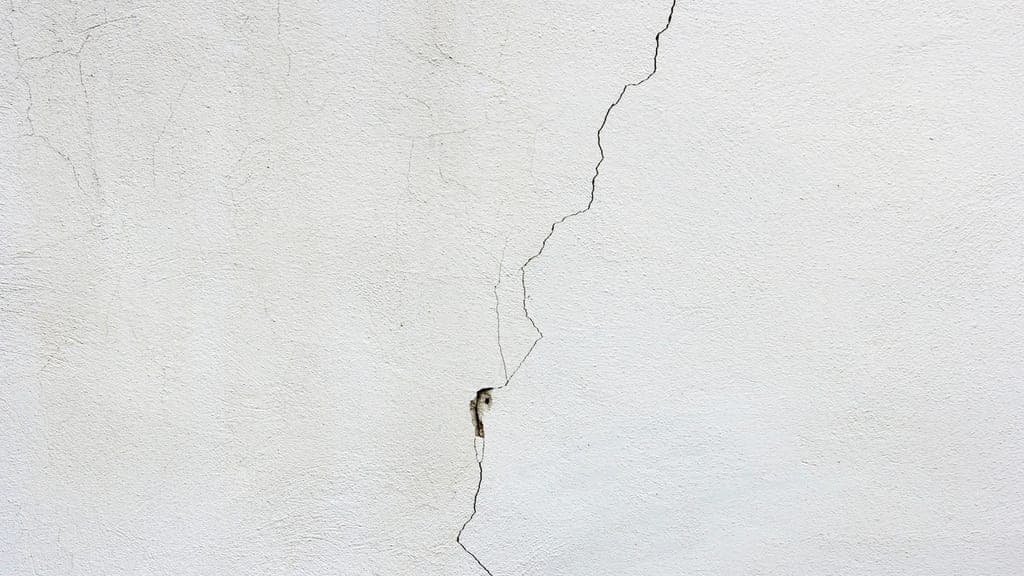
Short answer
Most cracks in a North Texas house are not structural. The Texas Section of the American Society of Civil Engineers says the majority of cracks do not compromise structural integrity, and a Houston engineers' group lists concrete shrinkage, wood shrinkage and brick expansion among common causes that get blamed on the foundation. The traits engineers pay attention to are width, displacement, pattern and whether a crack keeps growing. No website can tell you whether your crack matters: date it, photograph it, measure it, and if it is wide, offset or growing, have an independent Texas-licensed professional engineer look.
Why almost every house here has cracks
Concrete shrinks as it cures, lumber shrinks as it dries, brick expands and contracts with the heat, and the clay under Collin County swells when wet and shrinks when dry. Houston Black, the county's most common soil, has a "very high" shrink-swell rating in the USDA's NRCS soil survey data. Put those together and a house without a single crack would be the unusual one.
The engineers who write the Texas guidelines say as much. The Texas Section of the American Society of Civil Engineers, in its Guidelines for the Evaluation and Repair of Residential Foundations (version 2; a third version was adopted in 2022), says "the majority of cracks do not compromise structural integrity." The same document lists cracking of walls, drywall and concrete among the visible signs of poor foundation performance, then adds that seeing some of them "does not necessarily imply inadequate structural performance," and that their importance "may depend upon the age of the structure and any previous repairs."
That is the honest answer to "is this crack normal?": probably, but the pattern and the trend matter more than any single crack.
Cosmetic, functional, structural: how engineers sort distress
The Foundation Performance Association (FPA), a Houston group of engineers and industry members, sorts visible damage into three groups in its guidelines for evaluating foundation movement (FPA-SC-13-1, 2015):
- Architectural distress: cracks and separations that occupants notice, "sometimes referred to as 'cosmetic phenomena'." The paper says separations typically become noticeable at about 0.02 inch (0.5 mm) in drywall and 0.04 inch (1 mm) or wider in concrete or masonry.
- Functional distress: things that affect how the house works, such as doors that stick, won't latch or swing on their own, noticeable floor slopes, and tilted countertops.
- Structural distress: damage to studs, beams, columns or the foundation such that a member "can no longer carry its intended design load with an adequate safety factor."
Most cracks homeowners ask about fall in the first group. Cracks that come with the second group, such as a door that has started sticking next to a drywall crack, are the ones worth a closer look.
Cracks often blamed on the foundation that have other causes
The FPA publishes a table of distress often mistakenly attributed to foundation movement (FPA-SC-03-1, 2004). It was written from Houston experience for southeast Texas, so treat it as a guide rather than a rule for Collin County, but several entries match what North Texas homeowners describe:
- Hairline cracks in the slab or grade beam with no distress in the house above. The table lists concrete shrinkage during curing as one probable cause, and suggests waiting until the cracking "appears dormant."
- Surface cracks in a post-tensioned slab before the tendons are stressed. The table attributes these to shrinkage and says they "typically close after stressing."
- Vertical brick cracks running the full height of a wall, the same width top to bottom, often near the middle of a wall or an opening. The listed cause is thermal expansion and contraction of the brick, with too few or blocked expansion joints.
- Brick cracks at the middle or ends of a long lintel, such as over a double garage door, which the table ties to an undersized or overloaded lintel rather than to the foundation.
- Brick cracks beside a garage door jamb a foot or two above the slab, often with the brick pushed outward. The listed cause is a car bumper.
- Drywall tape and corner bead separations and crown molding gaps in a new house, attributed to lumber shrinking as it dries. The table suggests waiting about two years before repairing.
- Isolated cracked floor tiles that don't line up with cracks in neighboring tiles.
- Doors that bind at the bottom but close easily when lifted, doors that swing on their own, and latches that miss, which the table traces to hinges, sagging doors and installation.
None of this means your crack has one of these causes. It means a crack alone doesn't prove the foundation moved, and that a thorough evaluation looks at other explanations first.
The traits that make engineers look closer
The FPA's homebuyers' guide (FPA-SC-06-0) and maintenance guide (FPA-SC-07-0) describe what to record. These are general observations, not a way to diagnose a house.
Width
The homebuyers' guide says brick veneer cracks range from "hairline (1/64" or smaller) to fairly large (1/4" or larger)." The maintenance guide's move-in checklist uses rough benchmarks: no cracks in a new house, no more than hairline in a used house under 10 years old, and wall cracks no more than 1/8 inch wide in a house over 10 years old. A crack past those benchmarks isn't a verdict; it is a reason for a professional look.
Displacement
A crack where one side sits higher than the other, or has moved sideways, is different from a crack whose two faces still line up. The ASCE guidelines list "rotating, buckling, or deflecting masonry veneer panels" among the signs of poor performance, and the FPA homebuyers' guide asks whether a brick crack is "larger at the top than the bottom or vice versa."
Pattern and location
- Diagonal drywall cracks from door and window corners. The FPA homebuyers' guide calls these "significant indicators of excessive foundation movement," while small hairline cracks "are most often related to initial 'settling'."
- Stair-step cracks in brick. A crack that steps through the mortar joints shows the veneer has moved. The homebuyers' guide asks whether the crack goes through more than one brick and whether it sits near a window or door.
- Expansion joints in brick that are wider at one end. The homebuyers' guide calls an expansion joint "that varies in thickness vertically" a possible sign of excessive movement, and the maintenance guide suggests checking that they are uniform.
- Mortar that has been patched. The homebuyers' guide says re-pointed mortar "can be a sign of foundation movement" and suggests asking why it was done.
- Grade beam cracks. The same guide says "hairline cracks in the grade beams are generally acceptable but may indicate that there has been some foundation movement."
Growth
This is the trait that matters most, and the only one you can't judge in a single visit. The FPA's monitoring guidelines (FPA-SC-12-0) say a foundation "should be monitored for a minimum of one year" to tell seasonal, cyclical movement from ongoing movement, ideally with measurements every three months. They also note that when patched cracks reopen in the same place, that "typically indicates continuing movement in the same direction, not cyclical movement."
How to document and monitor a crack
A crack log costs almost nothing and gives an engineer far more to work with than "it's been there a while." This is general record keeping, the same kind the FPA guides suggest.
- Mark the ends. Draw a short pencil line across each end of the crack and write the date beside it. If the crack grows past the mark, you'll see it.
- Photograph it with a scale. The FPA homebuyers' guide suggests coins, credit cards or feeler gauges to estimate width, and says "a series of photographs of distressed areas can be helpful." Take the photo square to the wall from the same spot each time, with a ruler or coin in the frame.
- Measure the width. An inexpensive plastic crack-width card lets you match the crack against printed lines. Record the widest point and where along the crack it is.
- Consider a crack monitor. A tell-tale crack monitor is two overlapping plates fixed across the crack, one with a grid and one with a crosshair, so you can read both widening and sideways or vertical shift. It suits a crack you want to watch through a full season.
- Note what's around it. Doors that stick nearby, gaps at trim, the weather that month, and when you last watered or had a plumbing problem. The FPA maintenance guide suggests a walk-around about every six months, and says the best time is "after extreme dry or wet weather periods."
- Keep it in one place. A dated list or spreadsheet with the photos is enough.
Hairline cracks in a new Frisco or Prosper home
Collin County's newest neighborhoods are where many "is this crack normal?" questions start. Census estimates put the median year built at 2009 in Frisco and 2014 in Prosper (ACS 2020 to 2024, table B25035). New houses crack in their own way, for reasons that include the ones above: concrete shrinkage, lumber drying out, and soil adjusting to the new house.
The FPA maintenance guide says soils around a new foundation "normally stabilize within the first one or two years after construction," and that this initial movement "should not cause more than hairline cracking in the superstructure." If you see more than hairline distress, it suggests contacting the builder or the foundation's engineer of record first. See new home settling and builder warranties for the warranty and notice side of that conversation, and the Frisco and Prosper pages for local permit and soil details.
Seasonal cracks that open and close
Cracks that open in August and close after the fall rains are common on expansive clay. NOAA's 1991 to 2020 normals for McKinney's airport show July and August as the driest months. The FPA monitoring guidelines note that during normal cyclical movement, if cracks have been repaired, new ones "may occur when the foundation returns toward its initial" level. A log kept through a full year separates that seasonal breathing from a crack that only grows. For keeping soil moisture steady through the dry months, see how to water your foundation.
Who can tell you whether your crack matters
Only a licensed engineer can say what is causing a crack in your house. The Texas engineering board said in advisory opinion 43 that "analyzing the cause of a condition, recommendations for repair, or providing any other expert engineering opinion associated with a foundation" is the practice of engineering. A home inspector licensed by the Texas Real Estate Commission can report visible cracks, and a foundation repair company can tell you what it would sell you, but neither is the same as an independent engineer's opinion. The engineer report vs free inspection guide explains the difference, and engineer evaluation covers what the visit usually includes. You can check a Texas PE's license at pels.texas.gov.
Your crack log is the most useful thing you can hand that engineer.
If an engineer recommends repair, this guide can pass your request to an independent local foundation repair company for a bid. See how it works, including how referrals are paid for.
Frequently asked questions
Is a hairline crack in my slab normal?
Often, yes. Concrete shrinks as it cures, and a Houston engineers' group lists curing shrinkage as a common cause of cracks in slabs and grade beams with no distress in the house above. Whether a particular crack matters depends on width, offset, pattern and growth, which only an engineer can weigh for your house.
Are stair-step cracks in brick a foundation problem?
They show the brick veneer has moved, and foundation movement is a common reason, but brick is a wall covering, not the structure. Engineering groups suggest recording whether the crack is wider at the top or bottom, whether it passes through bricks, and whether it keeps growing, then having an independent engineer look if it does.
How wide does a crack have to be to worry about?
There's no single number. The Foundation Performance Association's move-in checklist uses rough benchmarks: no cracks in a new house, hairline in a house under 10 years old, and no more than 1/8 inch in wall cracks for older houses. Width together with displacement and growth over time is what engineers look at.
How do I monitor a foundation crack?
Pencil a mark and the date at each end, photograph it square on with a ruler or coin, and measure the widest point with a crack-width card. Recheck every few months and after very dry or wet spells. A Houston engineers' group suggests monitoring for at least a year to separate seasonal movement from ongoing movement.
Should I patch a crack before an engineer sees it?
It's better not to. The Foundation Performance Association's maintenance guide says new cracks shouldn't be repaired until someone qualified has investigated the cause, because the crack itself is evidence. Photograph and measure it first.
My new Frisco home already has cracks. Is that normal?
Hairline cracks in the first year or two are common as concrete cures, lumber dries and soil adjusts. The Foundation Performance Association says early movement should not cause more than hairline cracking. If you see more than that, contact your builder in writing and consider an independent engineer.